Vector Addition
 Posted: October 3rd, 2011, 3:26 pm
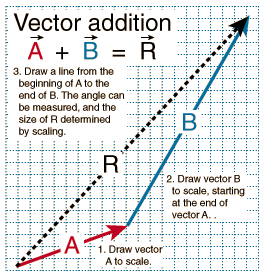
1. Graphical Method
1. Choose a scale for measurements that will allow all vectors to fit on the page
2. Draw the vectors to scale, placing the tail of the second vector at the head of the first.
3. Draw the resultant vector from the tail of the first vector to the head of the last.
4. Measure the length of the resultant vector using the same scale, and use a protractor to measure the angle.
2. Component (analytical) method
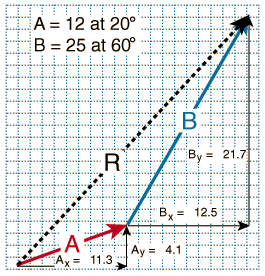
1. Sketch a diagram of the vectors being asked head to tail.
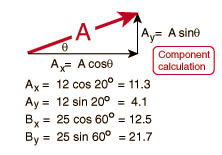
2. Resolve each vector into its x and y components.
3. Add all x components together to produce a single vector that acts in the x direction.
4. Add all y components
5. Calculate the resultant vector using the sum of the vectors in the x and y directions.
1. Choose a scale for measurements that will allow all vectors to fit on the page
- 1 cm = 50 m
1 cm = 230 N
1 cm = 15 m/s
2. Draw the vectors to scale, placing the tail of the second vector at the head of the first.
3. Draw the resultant vector from the tail of the first vector to the head of the last.
4. Measure the length of the resultant vector using the same scale, and use a protractor to measure the angle.
2. Component (analytical) method
1. Sketch a diagram of the vectors being asked head to tail.
2. Resolve each vector into its x and y components.
3. Add all x components together to produce a single vector that acts in the x direction.
4. Add all y components
5. Calculate the resultant vector using the sum of the vectors in the x and y directions.
 ,
,  .
.


